
Frederick’s Story
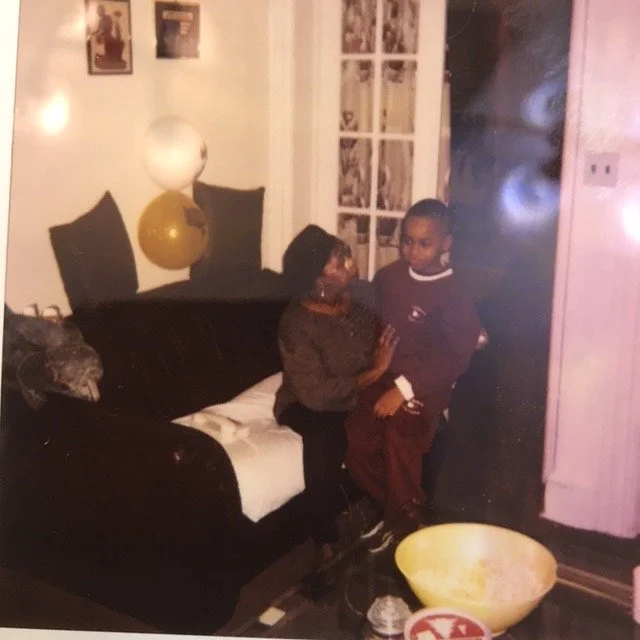
Frederick learned, before he knew the word for it, that language could be a kind of shelter. He learned it at his grandmother’s kitchen table in the projects of Yonkers, New York, where the world was never still and silence was a luxury no one trusted. Music moved through that room like breath. Soul that carried sorrow without apology. Hip hop that refused to die quietly. It was there that he first understood that words could do more than describe a life. They could insist upon it.
His grandmother, who understood something about inheritance that could not be written into wills, recognized in him a listening that bordered on devotion. She taught him that the men he admired, artists like Ghostface Killah and Jay-Z, were not so far from the poets the world had already decided to revere, voices like Langston Hughes and Gwendolyn Brooks. That the distance between them was not one of craft, but of permission.
And so she gave him more than guidance. She gave him belief. She passed down her love of reading and writing as something sacred, something to be carried forward whether the world made space for it or not.
Still, Frederick did not imagine himself a writer.
He was, first, a reader. A boy who understood the quiet miracle of being held by a book. One of those books was The Perks of Being a Wallflower, a story that made him feel less alone. And yet, even in that feeling, there was an absence he could not ignore. No one in those pages looked like him. No one carried where he came from.
He understood, then, something simple and devastating. A story could save you. And still leave you out. From that tension came purpose.
Frederick began to imagine a different kind of literature. One that did not ask the reader to disappear in order to be comforted. One that offered young people, especially those on the margins, not just escape, but recognition. Stories that say you are here, you are real, and you belong.
That desire was shaped by his life. By growing up Black and raised by Black women. By living as a cis, straight, disabled man. By knowing poverty not as an idea, but as a daily negotiation. His writing became an extension of that truth.
That commitment carried him beyond the page and into rooms filled with people searching, as he once did, for language that could hold them. In classrooms, auditoriums, and companies, Frederick does not speak at people. He speaks with them, creating moments that make audiences feel seen and challenged at the same time.
All of this led to him becoming a bestselling, award-winning author. But the work did not stop there. He has used his platform to lead philanthropic efforts and mutual aid initiatives that have moved millions of dollars directly to people in need. For him, storytelling and service are not separate. They are the same promise lived out loud.
Everything returns, in the end, to that kitchen table. To his grandmother. To the music. To the belief that words, when used with care, can make a life visible. Frederick did not become a writer because the world invited him to be one. He became a writer because someone he loved showed him that he already was.
Featured In